Princess Nursery Ideas for a Beautiful Baby Girl Room
By Jan Bay
A princess nursery can be sweet and feminine without covering the entire room in crowns and castles. Start with one clear direction, such as an elegant pink and white room, a vintage royal look, a storybook castle theme or Disney-inspired princess decor, then use the colors, furniture, bedding and wall details to carry that idea through the nursery.
Explore More Princess Theme Nursery Ideas
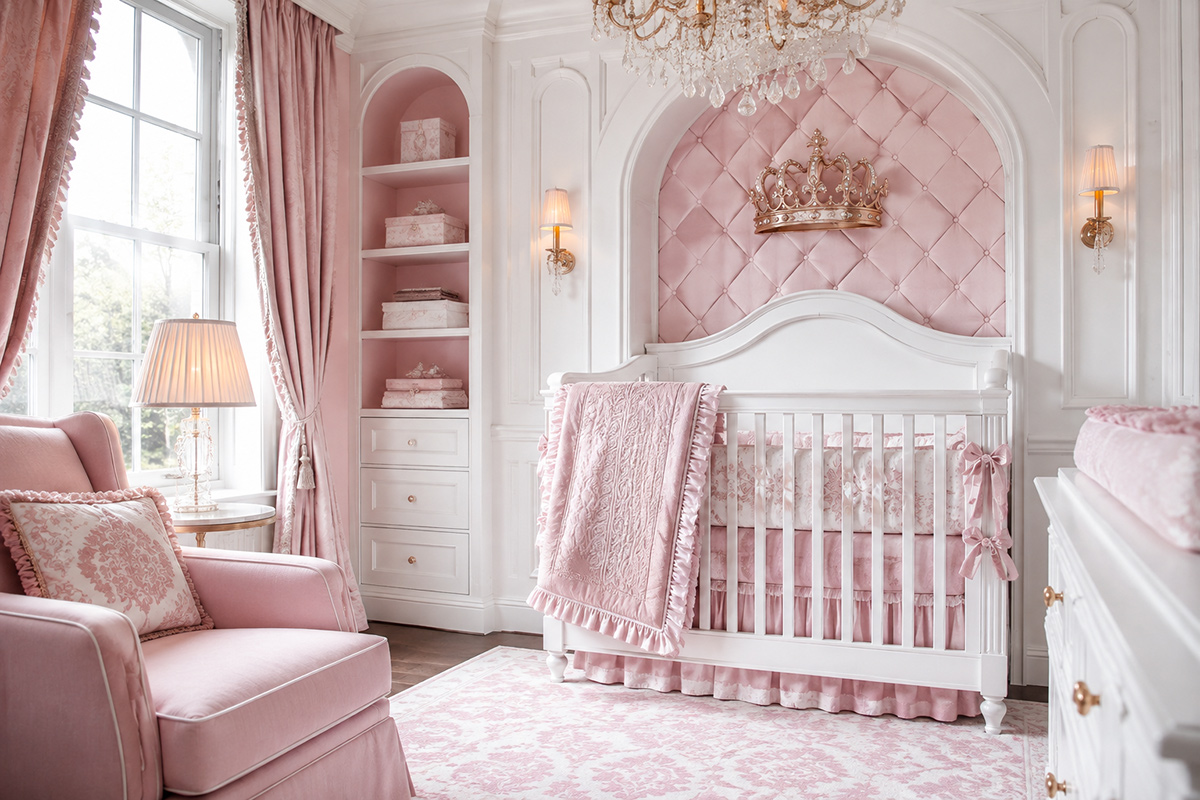
Jump to Princess Nursery Ideas
How to Create a Princess Theme Nursery
Princess Nursery Bedding and Furniture
How to Create a Princess Theme Nursery
Start by deciding what kind of princess room you actually want. A princess theme nursery can lean elegant and royal, sweet and storybook-like, vintage and romantic, or more playful with recognizable Disney princess colors and details. Pick one of those directions before you start buying anything.
I wouldn't try to fit crowns, castles, carriages, glass slippers, tiaras, roses and every princess character into the same room. Choose two or three details you really like and repeat them in different places. A crown over the crib, a castle on one wall and a little gold or silver trim may be all you need.
The crib area is an easy place to establish the look first. You might begin with a white or wood crib, then add princess-inspired bedding colors, wall art and one decorative feature above or beside the crib. If you want furniture with more of a fairytale look, browse my princess beds and cribs for royal, storybook and carriage-inspired styles.
If the room already has furniture you like, don't replace it just because it doesn't look royal enough. Plain furniture actually gives you more freedom with wallpaper, art, curtains and smaller princess details. I'd rather let one beautiful wall treatment or crib-area feature carry the theme than make every piece of furniture look like it came from a castle.
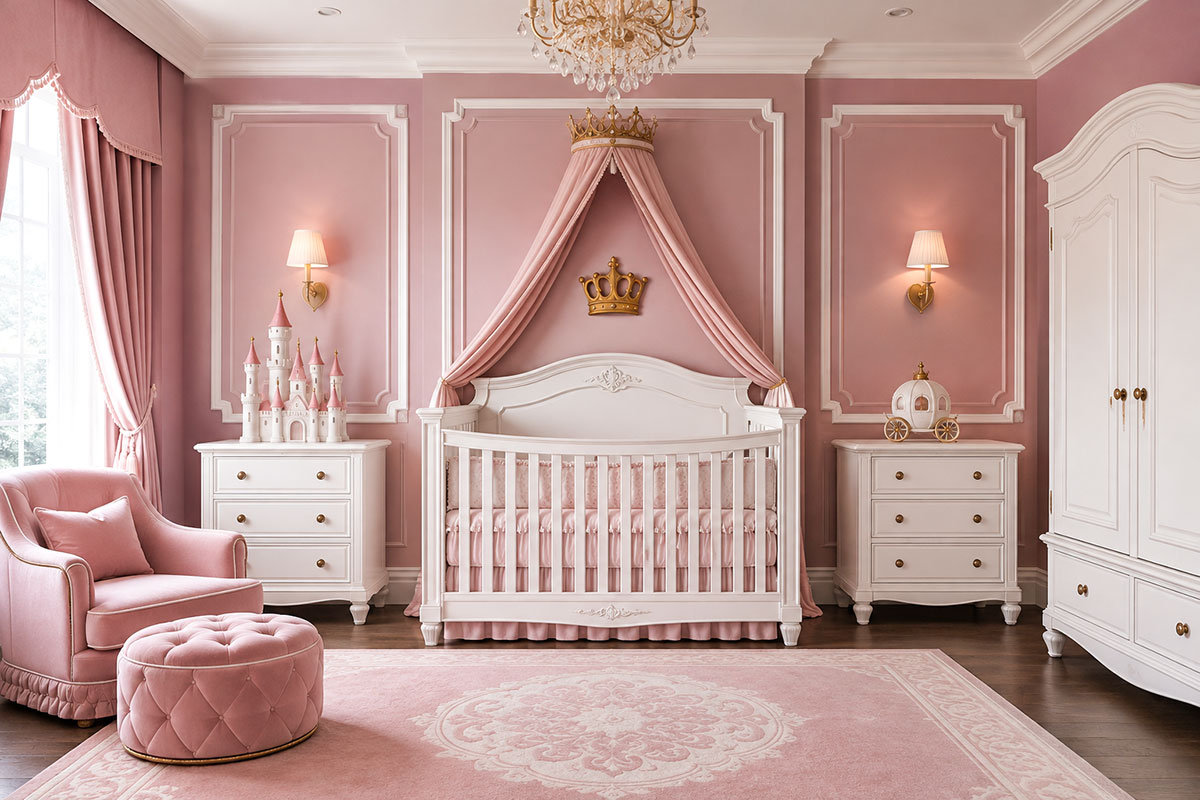
Choose One Main Princess Motif
A crown is probably the easiest motif to work with because it doesn't lock you into one character or one age. You can use a small crown in wall art, repeat the shape on a decorative pillow or rug, and still change the rest of the room later.
Castles give you a more obvious storybook look. A castle mural, wallpaper panel or large framed print can become the room's focal point, so you won't need many other large decorations.
Carriages can work beautifully too, especially if you want something more whimsical. I would use them in artwork or one decorative accessory rather than trying to make every piece of the room carriage-shaped.
Keep this part simple. One recognizable motif repeated a few times will read as a princess nursery without making the room look like a themed party.
Princess Nursery Colors That Go Beyond Pink
Pink is an obvious choice for a princess nursery, but it doesn't have to cover every surface. In fact, I'd usually give pink something quieter to sit beside. White, gray, lavender, muted plum, soft blue and natural wood can all keep the room from becoming one solid block of pink.
Pink and White
Pink and white is the easiest classic combination. Use white for larger pieces such as the crib, dresser or curtains, then let pink show up in the walls, rug, artwork or smaller textiles. If the walls are already pink, I wouldn't make the crib bedding, curtains and rug exactly the same shade.
A little variation makes the room much more interesting. Pale pink walls can sit beside dusty rose fabric, deeper raspberry artwork or a few burgundy accents without losing the princess look.
Pink, Gray and Black
If you want something with more contrast, gray or charcoal can ground the room nicely. Black works in much smaller doses, especially through picture frames, furniture hardware or a chandelier.
You can see how that darker contrast changes the whole mood in this pink and black princess nursery, where pink walls are paired with black furniture and dramatic decorative details.
Lavender and Plum
Lavender gives you a royal color without relying completely on pink. Pair it with white, gray or natural wood and add a deeper plum accent if the room needs more depth.
I like lavender particularly well for a vintage princess room because it works with antique-inspired furniture, ornate frames and old-fashioned floral patterns without requiring everything to be pastel.
Pink with Sage Green
Sage green may not be the first princess color that comes to mind, but it works surprisingly well with dusty pink and rose. The green keeps floral and garden-inspired princess rooms from becoming too sugary.
The existing pink and white princess nursery uses touches of green with pink, cream and rose details, which is a useful example if you want a softer storybook look.
Princess Nursery Decor Without Filling Every Inch
Once the colors are settled, choose the decorations that will actually be noticeable. You don't need a dozen small princess items scattered around the room. I'd rather use one larger piece above the crib, one feature on another wall and a few smaller details that repeat the same idea.
A crown, castle or carriage can become the main decorative shape. Then let the rest of the room support it with color and texture instead of adding another princess symbol everywhere you look.
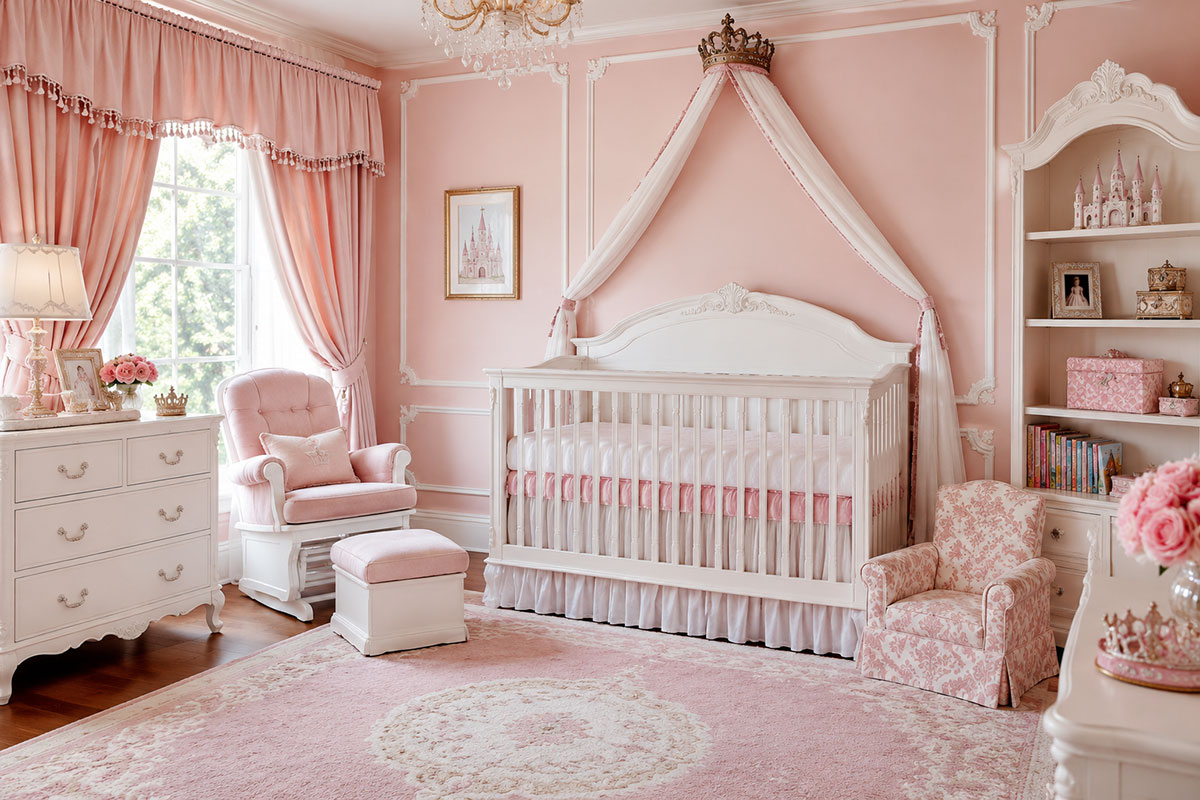
Crowns and Tiaras
Crown decor is easy to repeat without making the theme too literal. Try one crown-shaped wall piece, a small crown print and perhaps a subtle crown detail somewhere near the dresser. That's really enough.
If you're adding a decorative piece near the crib, keep anything heavy, framed or hanging securely mounted and outside the baby's reach. The U.S. Consumer Product Safety Commission has current safe sleep guidance that is worth reviewing before you decide what belongs around the sleep area.
Castle Details
A castle can do much more visual work than a collection of tiny decorations. Use a mural, wallpaper panel, decal or large piece of artwork and let that become the part of the room your eye goes to first.
If you already have a castle mural, don't feel as though you also need castle bedding, castle curtains, a castle rug and castle lamps. Let the wall have its moment.
Carriages, Chandeliers and Royal Details
A carriage motif can make the room more playful, while an ornate light fixture, decorative mirror or carved furniture detail pushes it toward an elegant royal look. You don't have to use both approaches.
I would also be careful with decorative chandeliers. They can look wonderful in a princess nursery, but lighting still needs to work for everyday use. You need enough light to change clothes, find things in drawers and move around the room safely after dark.
Princess Nursery Wall Ideas
The walls can carry quite a bit of the princess theme, which means the furniture and bedding don't have to work nearly as hard. I'd choose one main wall treatment first, especially if the crib wall or dresser wall is going to be the focal point.
Castle Murals and Wallpaper
A castle scene gives you an instant storybook look. It can be as detailed as a painted castle in the clouds or as simple as a wallpaper panel behind the dresser. If the wall treatment already includes towers, flags, stars or carriages, I'd keep the rest of that wall fairly quiet.
You don't need a giant mural either. A framed castle print or removable wall decal can establish the idea without making a permanent change to the room.
If you want recognizable fairytale imagery, take a look at my Disney Princess wallpaper ideas for another way to build the theme around the walls.
Crown Wall Decor
A crown works especially well above a dresser, reading chair or low storage piece. You can use one larger crown as the focal point and repeat the shape once or twice in smaller artwork elsewhere.
My princess nursery wall decorations page has more ideas for crown art, castle details and other royal wall accents.
Personalized Princess Art
A baby's name can become part of the theme without adding another character or motif. Try a framed name print with a small crown, an initial inside an ornate frame or a short princess-inspired phrase.
I'd keep personalized art readable and fairly simple. Once you add a name, crown, castle, flowers and a long quote to one piece, the design starts doing too much.
Decorating Around the Crib
Be conservative with anything mounted near the crib. Heavy frames, mirrors, shelves and breakable decorations don't need to hang directly over the sleep space. If you want something decorative on that wall, wallpaper, a painted design or securely installed lightweight wall treatment gives you the look without putting a heavy object above the crib.
Princess Nursery Bedding and Furniture
Bedding is a useful place to pull your colors together, but I wouldn't build the entire room around an elaborate matching crib set. Start with the colors and pattern you like, then repeat pieces of that palette around the room.
A dusty pink fitted sheet, for example, might lead you toward white furniture, deeper rose curtains and a small amount of gold or plum in the wall art. You get a coordinated room without buying ten matching pieces.
Keep the Crib Itself Simple
For an infant, the sleep space should stay bare except for a properly fitted crib sheet. Decorative pillows, quilts, bumpers and loose blankets may look pretty in photographs, but they don't belong in the crib while a baby is sleeping.
You can still use beautiful textiles elsewhere. Hang a handmade quilt on a secure display rack away from the crib, use the pattern as color inspiration or save decorative pillows for a chair that isn't part of the baby's sleep space.
White Princess Nursery Furniture
White furniture is easy to work with because it lets pink, lavender, floral and castle details stand out. It also keeps you from having to find a crib and dresser that look specifically "princess."
If you already own a plain white crib and dresser, I'd keep them. Add the fairytale feeling around them instead.
Wood and Antique-Inspired Furniture
Natural wood gives a princess room a completely different personality. Medium and darker woods pair nicely with dusty rose, plum, ivory and vintage floral patterns, especially if you want the nursery to feel more like an old storybook than a pink palace.
Ornate furniture can work too, but you don't need every piece to have carved details. One decorative dresser, mirror or chair can provide enough character.
If you're comparing styles, my princess beds and cribs page includes royal, storybook and fairytale-inspired furniture ideas.
Let the Dresser Do Double Duty
A standard dresser can work as the changing area and later remain in the room after the diaper stage is finished. I'd choose practical storage first, then make it fit the theme with artwork, drawer hardware or color rather than buying a novelty piece that has only one use.
Disney Princess Nursery Ideas Without Using Every Character
A Disney Princess nursery doesn't have to include every princess in the collection. In fact, choosing one character or one color direction gives you a much easier room to decorate.
You might build around Cinderella with pale blue, silver and carriage details, use Belle as inspiration for warm yellow and rose accents, or take a softer under-the-sea direction from Ariel with muted aqua and lavender.
You can also skip the character faces completely and borrow the recognizable details instead. Castles, glass slippers, roses, crowns, carriages and royal blue or lavender can suggest the theme without covering every wall with character graphics.
Choose Character Decor That Can Be Changed Later
If you want actual Disney Princess artwork, I'd use it in pieces that are easy to replace, such as framed prints, removable decals or a small section of wallpaper.
That way, if your little girl eventually decides she loves dinosaurs more than princesses, you aren't repainting an entire mural.
Mix Disney Pieces with Regular Nursery Furniture
You don't need branded furniture to make the theme obvious. A simple crib and dresser can sit beside Disney Princess wall art, a castle print and bedding colors inspired by a favorite character.
That combination is easier on the budget and gives the room more staying power.
If wallpaper is going to carry the character theme, browse my Disney Princess wallpaper and background ideas before deciding how much of the room you want to cover.
Elegant and Vintage Princess Nursery Ideas
A princess room doesn't have to look juvenile. If you prefer something more elegant, borrow from old furniture, traditional interiors and storybook illustrations rather than relying on bright character decor.
Dusty rose, muted lavender, plum, ivory, gray and natural wood are easier to layer than one shade of bubblegum pink. Then you can add a little shine through an ornate mirror, metal picture frames or decorative hardware.
Try a Rococo-Inspired Princess Nursery
Rococo details are a natural fit for this theme because curved furniture, ornate frames and decorative molding already have a royal look. You only need a few of those pieces.
For an actual room example, see Kennedy's pink and gray Rococo princess nursery. The pink and gray combination gives the princess theme more contrast than a completely pink room.
Vintage Princess Nursery
A vintage version can use antique-inspired furniture, old-fashioned floral patterns, ornate frames and softer royal colors. It feels more collected than matched.
You can see another interpretation in Giuliana's vintage princess nursery, where purple and royal details take the room in a different direction from the typical pink princess look.
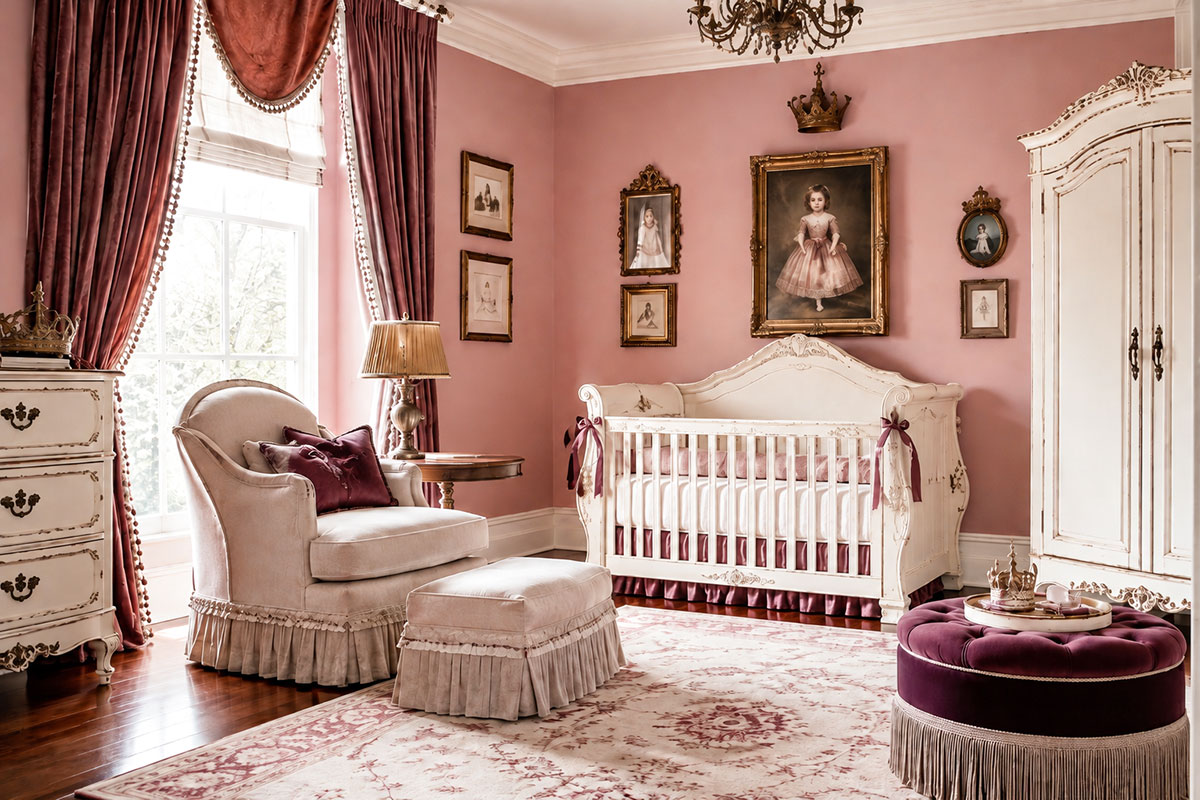
Use Metallic Details Sparingly
Gold and silver can make a princess room feel more royal, but I wouldn't spread metallic finishes across every surface. A mirror frame, lamp base, curtain rod or a few picture frames are enough.
Choose either warmer gold tones or cooler silver tones as the main metal and repeat that finish a few times. The room will look more intentional than if every accessory uses a different finish.
Real Princess Nursery Ideas You Can Borrow From
Real nursery rooms are useful because you can see how much princess decor is actually needed once the furniture, walls and textiles are all in the same space. Some of these rooms go fully royal while others use just a few fairytale details.
Pink and White Princess Nursery
The pink and white princess nursery uses a classic color scheme with a decorative crib crown and floral details. The sage green accents also show how another color can keep pink and white from feeling too predictable.
Picture Perfect Princess Nursery
This picture perfect princess nursery uses a castle mural around the changing area as a major focal point. It's a good example of letting one wall carry much of the storybook theme.
Pink and Black Princess Nursery
If pastel isn't your thing, the pink and black princess nursery takes the room in a more dramatic direction with dark furniture and high-contrast accents.
Butterfly Princess Nursery
The Butterfly Princess Baby Dream Nursery mixes the royal theme with butterflies for a lighter fairytale direction. Combining princess details with one second motif can work nicely when the two ideas share the same colors.
Pink Princess Dream Nursery
If you want to see a more traditional pink approach, browse the Pink Princess Dream Nursery for another real-room example.
Exotic Princess Nursery
The Exotic Princess Nursery is useful if you want to move away from the familiar pink-and-white formula and see how the princess idea can be interpreted in a less expected way.
Don't feel like you need to copy any one room from top to bottom. Take the color combination from one, a wall idea from another and a furniture direction from a third. Then stop when your own room feels finished.
Princess Nursery FAQ
What colors work best for a princess nursery?
Pink and white are the classic choice, but you can also use lavender, plum, gray, sage green, soft blue or natural wood. I'd choose two main colors and one smaller accent rather than trying to use every traditional princess color at once.
Does a princess nursery have to be pink?
No. Lavender, pale blue, ivory, gray and even deeper plum can all work with crowns, castles and royal details. A princess theme comes from the combination of motifs, furniture and decorative details, not from pink alone.
How can I make a princess nursery look elegant?
Use fewer literal princess decorations and put more attention into the furniture, wall treatment, lighting and color palette. An ornate frame, dusty rose wall, vintage-inspired dresser and one crown motif can look more elegant than a room filled with matching character accessories.
Can I decorate a Disney Princess nursery without using character bedding?
Yes. Use colors and recognizable details from a favorite princess instead. A Cinderella-inspired room might use pale blue, silver and carriage art, while a Belle-inspired room could use muted yellow, rose and traditional furniture.
What should go inside a princess-themed crib?
For an infant, keep the crib sleep surface simple with a properly fitted crib sheet. Decorative pillows, loose blankets, quilts, bumpers and stuffed items shouldn't be placed in the crib for sleep. Use those colors and patterns elsewhere in the nursery instead.
What is the easiest way to add a princess theme without redecorating the whole nursery?
Start with the wall art. Add one crown, castle or carriage feature, repeat one of its colors in the curtains or rug and leave the major furniture alone. You can get a very clear princess theme without replacing everything in the room.
Putting Your Princess Nursery Together
Once you've chosen the color palette and one main princess motif, the rest gets much easier. Let the crib, dresser and other large furniture pieces stay practical, then use the walls, artwork, textiles and a few royal details to give the nursery its personality.
I'd also leave a little room for change. A crown print can be replaced, curtains can move to another room and a castle decal can come down. The basic furniture and layout can stay useful long after the princess stage has passed.
If you still haven't settled on this theme, browse my baby girl nursery themes or return to the main baby nursery themes collection to compare other room styles before you decide.


When you click on links to various merchants on this site and make a purchase, this may result in this site earning a commission. This does not affect the price you pay.

UBGI Gold Standard 2026
Reviewed under the site's
editorial checklist.
About Jan | Contact | Baby Nursery Ideas (Blog) | Site Map | Privacy Policy | Disclosure Policy | Disclaimer | Affiliate Disclosure | Earnings Disclosure | Facebook | Pinterest
I am a participant in the Amazon Services LLC Associates Program, an affiliate advertising program designed to provide a means for us to earn fees by linking to Amazon. As an Amazon Associate I earn from qualifying purchases.
Copyright © 2006-2026. All Rights Reserved.