Purple Baby Nursery Ideas for Lavender, Lilac and Plum Baby Girl Rooms
By Jan Bay
Purple nursery ideas can range from soft lavender and pale lilac to dusty mauve, rich plum and deeper violet. The easiest way to make purple work in a baby girl's room is to choose one main shade, balance it with a quieter wall or furniture color and then repeat the purple in a few well-chosen details instead of trying to make everything match.
Explore More Nursery Color Ideas
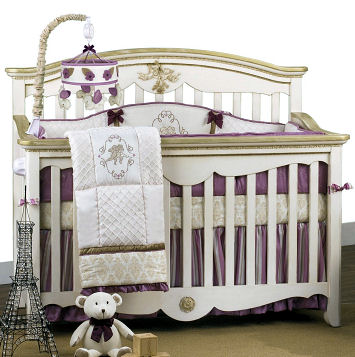
Shop the Look
Jump to:
Plum and Dark Purple Nursery Ideas
Best Colors to Pair with Purple
Purple Baby Nursery Ideas and Color Schemes That Make Sense Together
Purple can go in several completely different directions, so I wouldn't start by shopping for anything labeled simply "purple nursery decor." Decide which shade of purple you actually want first. Lavender is pale and a little cooler. Lilac can lean pinker. Dusty mauve has more gray in it. Plum gives you a much deeper color. Violet is clearer and brighter.
Those names aren't perfectly consistent from one paint or fabric company to another, either. Pay more attention to the color sitting in front of you than the name printed on the sample.
If you're starting with an empty room, I'd choose the purple and the furniture finish together. A pale lavender beside a white crib gives you a very different room from the same lavender beside walnut. White makes the color look clearer. Natural wood warms it up. Dark wood gives pale purple more weight.
If the crib, dresser or flooring is already staying, use that as your fixed point. Bring several purple samples into the room and compare them beside those finishes. Don't choose the paint from a photograph on your phone and don't judge it under store lighting.
A simple three-part palette is plenty:
Light purple room: lavender + warm white + light oak
Vintage purple room: dusty lilac + ivory + medium or dark wood
Deeper purple room: plum + warm white or mushroom + walnut
Modern purple room: muted violet + white + charcoal or black accents
Colorful purple room: lavender + muted green + warm white
If none of those combinations sounds quite right, go back to my baby color schemes page and compare purple with the other nursery palettes before you buy paint, curtains or a rug. It's much easier (and less expensive) to change direction at that point than after the room is half finished.
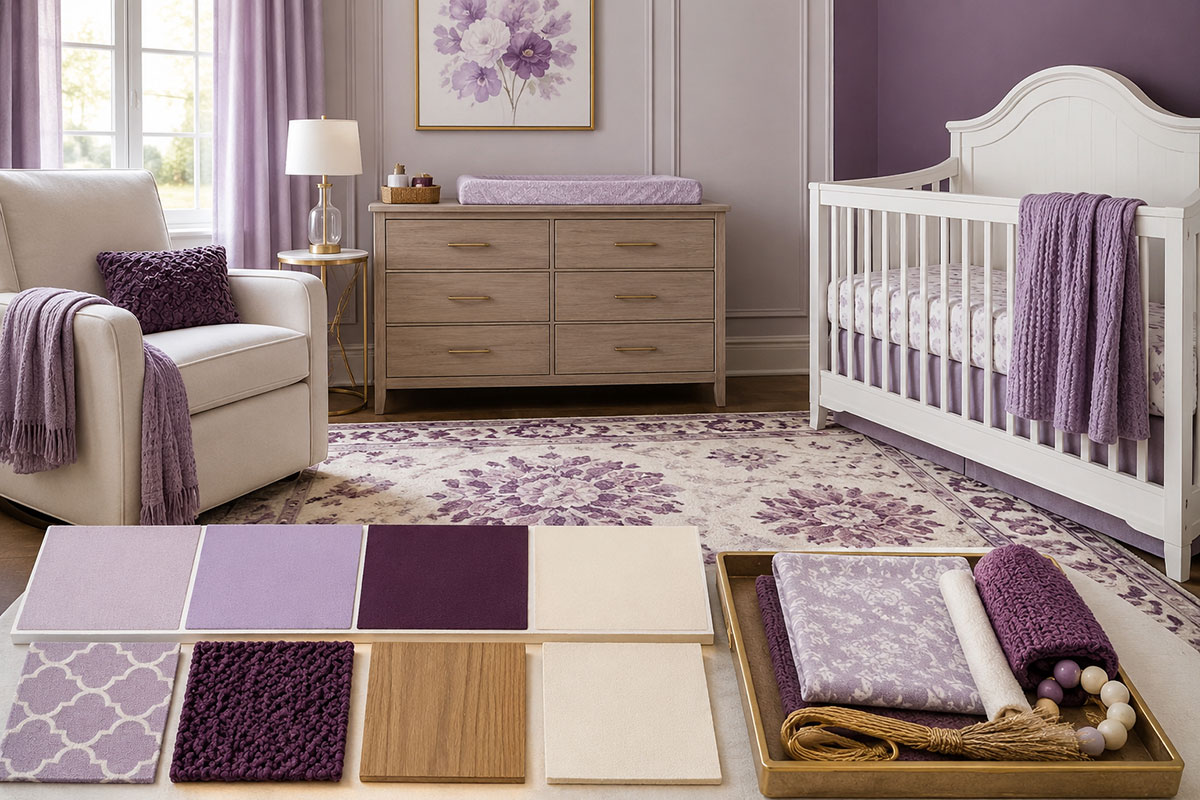
I also wouldn't try to use four or five different purples just because they belong to the same color family. One main purple, a lighter or darker variation of it and one contrasting color gives you enough variation without turning the room into a paint chart.
Lavender Nursery Ideas That Don't Depend on Matching Sets
Lavender is the easiest purple to spread across a larger area because it can act more like a background color than a decoration. If you want purple walls, this is the shade family I'd look at first unless you are going for a dramatic effect.
I'd still resist making the walls, curtains, rug, crib sheet and storage baskets the same lavender. Once that happens, you lose the shapes of the individual pieces and the room starts looking flat.
Instead, decide where lavender gets the biggest job.
If the walls are lavender, keep the crib and larger window treatments lighter. Warm white curtains, a white or natural wood crib and a rug that mixes ivory with a little purple are enough.
If the walls are white or cream, you can use more lavender in the room itself. Curtains, a patterned rug, dresser knobs and framed artwork can carry the color without requiring a purple wall.
If you're using lavender wallpaper, I'd pull only one purple shade from the pattern for the rest of the room. You don't need matching butterflies, flowers or vines on every other surface.
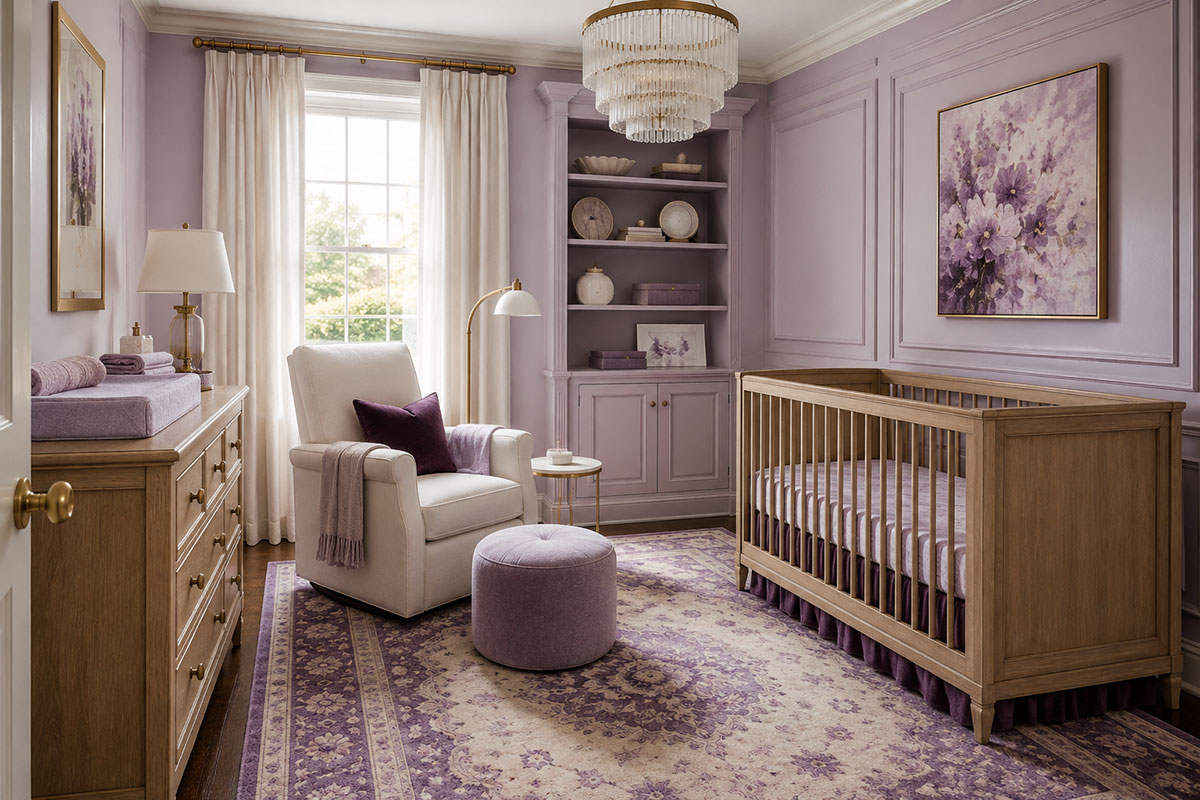
Lavender also gives you room to use a theme without making the theme carry the entire design. Butterflies are a good example. A lavender wall or rug can establish the color first, while a few butterfly details give the room its subject. My lavender butterfly nursery ideas show how that combination can move from simple wall decor to a more definite baby girl theme.
If you like lavender but you're afraid the finished room will be too pale, don't automatically buy a darker purple paint. A walnut dresser, medium wood crib, charcoal picture frame or deeper purple rug can give the lighter lavender enough contrast.
Lilac Nursery Ideas with a Little More Warmth
Lilac and lavender are often treated as the same color, but they don't always behave the same way in a room. Many lilacs lean a little pinker, while many lavenders lean bluer or grayer. That difference matters when you start putting them beside flooring, wood and white paint.
A pink-leaning lilac beside a very cold blue-white can make both colors look sharper than you expected. I'd compare it with ivory, warm white or a slightly creamy neutral before committing to bright white everywhere.
Lilac also looks good with medium and darker wood. If you already own a brown dresser or you're keeping hardwood floors, don't assume you need to paint all of that furniture white just to make purple fit. The brown can keep a pale lilac room from becoming too sugary.
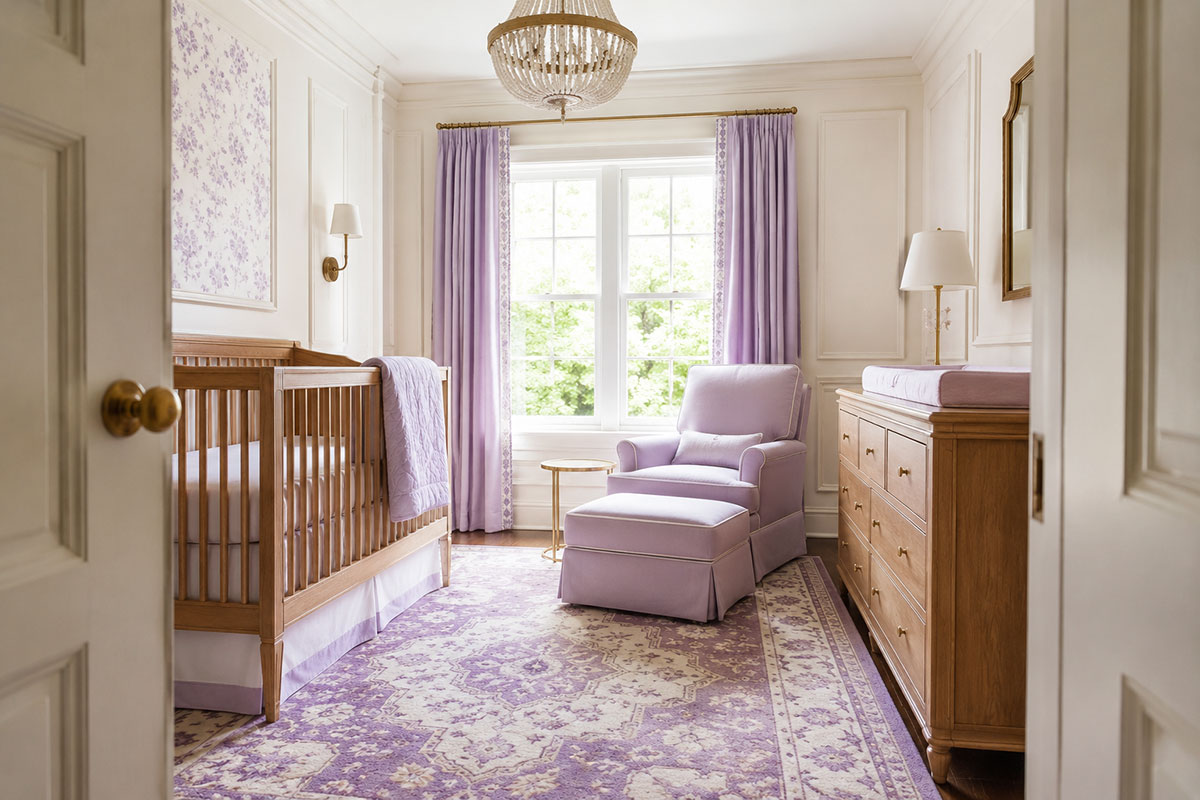
For a small nursery, I'd use lilac in one or two broad areas rather than scattering twenty little purple accessories around the room. Lilac curtains plus a related rug can do more than a shelf full of small decorations.
Layout matters too. If the room is tight, settle the crib, dresser and chair placement before deciding which wall deserves the color. My small nursery layout ideas can help with that part before you start painting around furniture that later has to move.
If the room already has a lot of pink in it, choose carefully. Lilac can blend beautifully with dusty rose, but a bright bubblegum pink beside a pink-purple lilac can push the whole room much sweeter than you intended. In that case, I'd let one color lead and use the other only as an accent.
Plum and Dark Purple Nursery Ideas Without Making the Room Too Heavy
Plum is a different decorating job from lavender. I wouldn't automatically put deep plum on all four walls, especially before seeing what the room does with daylight and lamps.
Start with the surface that can handle the weight. That might be one painted wall, a substantial rug, full-length curtains or the dresser. Let the other large surfaces give the color some room.
A plum wall with warm white on the remaining walls can be enough. Add walnut or medium wood furniture and the room takes on a richer look. If you want something crisper, pair plum with white furniture and repeat a small amount of black or charcoal elsewhere.
Dark purple also works well in a nursery that isn't intended to look pastel. A purple and black nursery that was recently shared by a visitor is a good example of taking the color in a completely different direction instead of treating purple as automatically delicate.
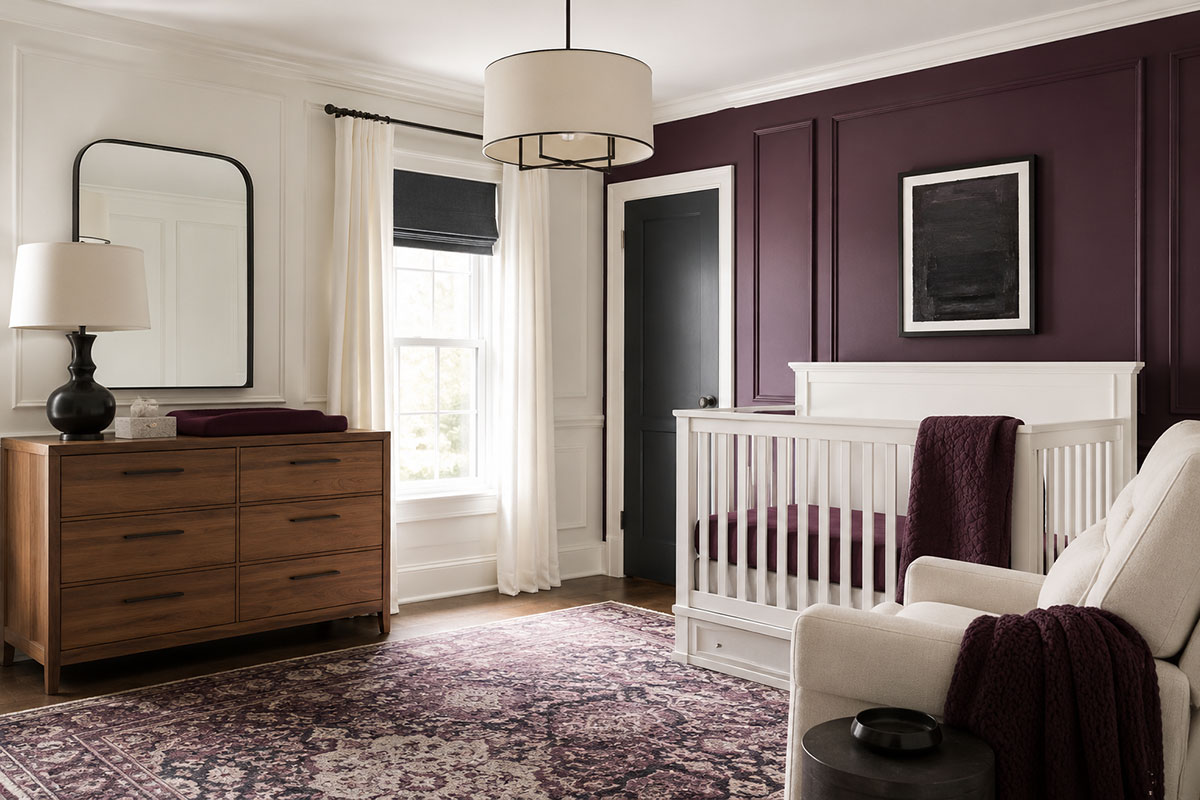
If you're nervous about a dark wall, try the plum in fabric first. Curtains are useful because they cover enough area to tell you whether you really want that much dark purple in the room. A rug can do the same thing.
And check the color after sunset. Deep purple can change quite a bit once natural light disappears. Something that reads as plum during the afternoon may look much closer to brown, wine or near-black under a warm lamp.
Best Colors to Pair with Purple in a Nursery
Purple doesn't need another obvious nursery color beside it. In fact, some of the better combinations use a quieter partner and let purple be the color you remember.
Purple and warm white is the easiest place to begin. Warm white keeps lavender and lilac light without giving the room the hard edge that a very bright white can sometimes create.
Purple and natural wood is useful when you want less of a pastel look. Oak works nicely with lighter purple. Walnut gives lavender and plum more depth.
Purple and gray can work, but watch the undertones. A cool gray beside a blue-purple can become very cold-looking. Mushroom, greige or another warmer gray gives you more flexibility. If you're considering gray as more than an accent, compare the combination with my gray nursery ideas.
Purple and green can be beautiful when one of the colors is muted. Lavender with sage or a dusty green is easier to manage than bright violet with equally bright lime. If you want the green to stand out, keep the rest of the room simple.
Purple and pink is prettier when the shades aren't competing. Dusty rose and muted lilac can share a room. Bright pink and bright purple give you a much louder result. My pink nursery ideas are useful if you're deciding which of those two colors should take the lead.
Purple and black gives you the most contrast. You don't need much black. A curtain rod, frames, lamp base or dresser hardware may be enough to make pale purple look much more defined.
I'd choose the pairing before choosing a theme. Once you know the room is lavender and walnut, or plum and warm white, it's much easier to tell whether floral art, butterflies, vintage pieces or something more modern actually belongs there.
Purple Nursery Walls, Paint and Wallpaper Ideas
You don't have to choose between "purple walls" and "no purple walls." There are several ways to put the color on the room itself.
Four painted walls: Best suited to a purple you genuinely like in large amounts. Lavender, dusty lilac and muted mauve are easier candidates than a very saturated violet.
One purple wall: Useful when you love a deeper plum or want the color concentrated in one area. Pick the wall based on what you see from the doorway and how the furniture fits, not simply because it's the wall behind the crib.
Lower wall color: Purple below a chair rail or wall molding with a lighter color above gives you plenty of color without surrounding the entire room in it.
Wallpaper: Choose wallpaper when the pattern is doing something paint cannot. Flowers, small geometrics, stars or a delicate illustrated design can introduce several related purples at once. If the pattern is busy, I'd keep the other walls much quieter.
Painted shape or mural: A wide arch, simple color block or painted border can introduce purple without turning it into the permanent background for every piece of furniture.
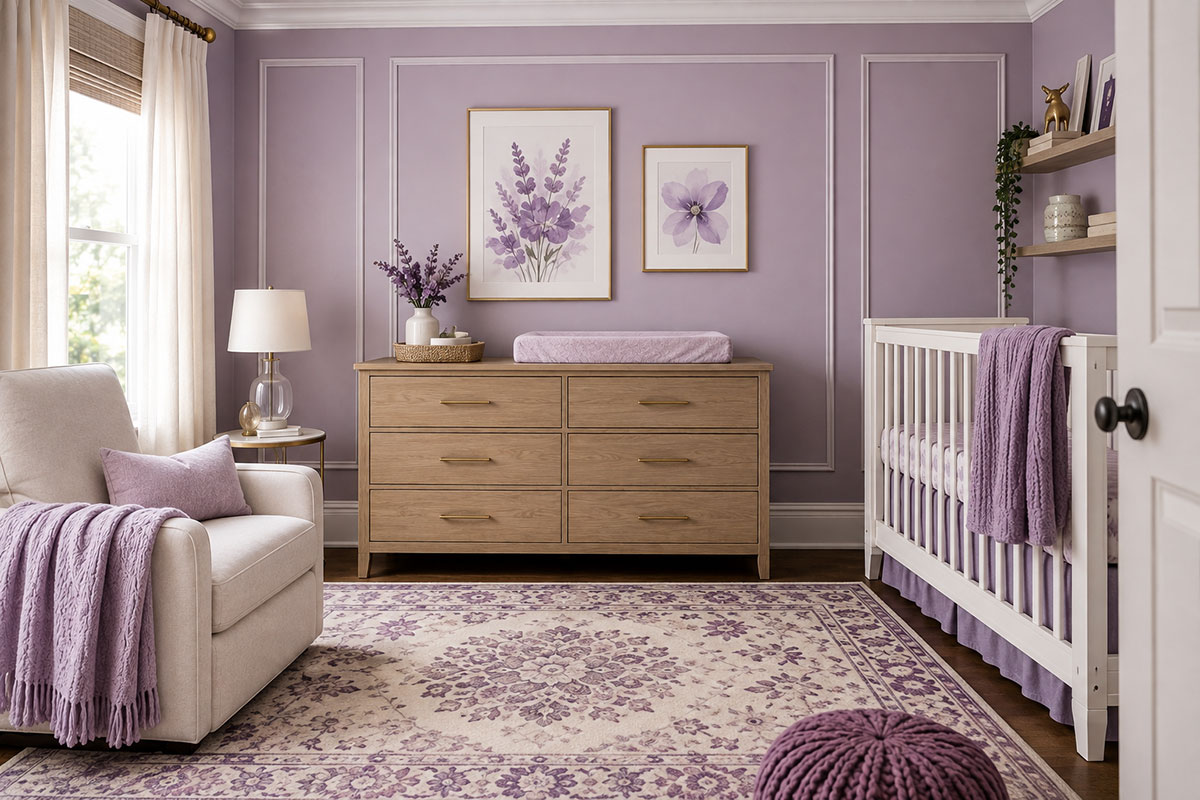
Before painting the whole room, put a reasonably large sample on at least two walls. Look at it during the morning, later in the day and under the lighting you'll actually use at night. A little paint card doesn't show you what several hundred square feet of color will do.
The window treatment will change the wall color too. Purple beside bright daylight can look very different after blackout curtains are closed. If you're replacing the window coverings, choose them while you're making the wall decision rather than treating them as an afterthought. My nursery curtains guide covers fabric, width, light control and placement in more detail.
Purple Nursery Decor Ideas for Rugs, Curtains, Furniture and Wall Art
Once the walls and furniture are decided, I wouldn't go hunting for a purple version of every nursery accessory. Pick a few places where the color will be easy to see and stop there.
I'd usually repeat purple in about three areas of the room. That might be the curtains, part of the rug and the artwork. Or it could be the wall, crib sheet and a painted dresser. They don't have to match exactly. They just need to look related.
Rugs: A patterned rug is one of the easiest places to mix purple with the other colors in the room. It also gives you more freedom than a solid purple rug because ivory, gray, green, pink or brown can appear in the same pattern. Check my nursery rug guide before choosing the size, because a pretty rug that's too small won't fix itself once the furniture is on top of it.
Curtains: Full-length lavender or plum panels make a much bigger color statement than they appear to make in a product photograph. If the walls are already purple, a lighter neutral curtain may give you better balance.
Dresser: A secondhand dresser can be a good place for a deeper purple if you don't want it on the walls. You can also leave the dresser wood or white and change only the knobs for a much smaller dose of color.
Wall art: Don't feel obligated to buy a set of six matching purple prints. One larger piece above the dresser and one or two smaller pieces elsewhere can carry the color without covering every open wall.
Crib sheet: A fitted sheet is an easy place to use a purple print, but keep decorative quilts, pillows, bumpers and other loose items out of an infant sleep space. The U.S. Consumer Product Safety Commission recommends a bare crib with a fitted sheet only. You can review its Safe Sleep guidance when you're setting up the crib.
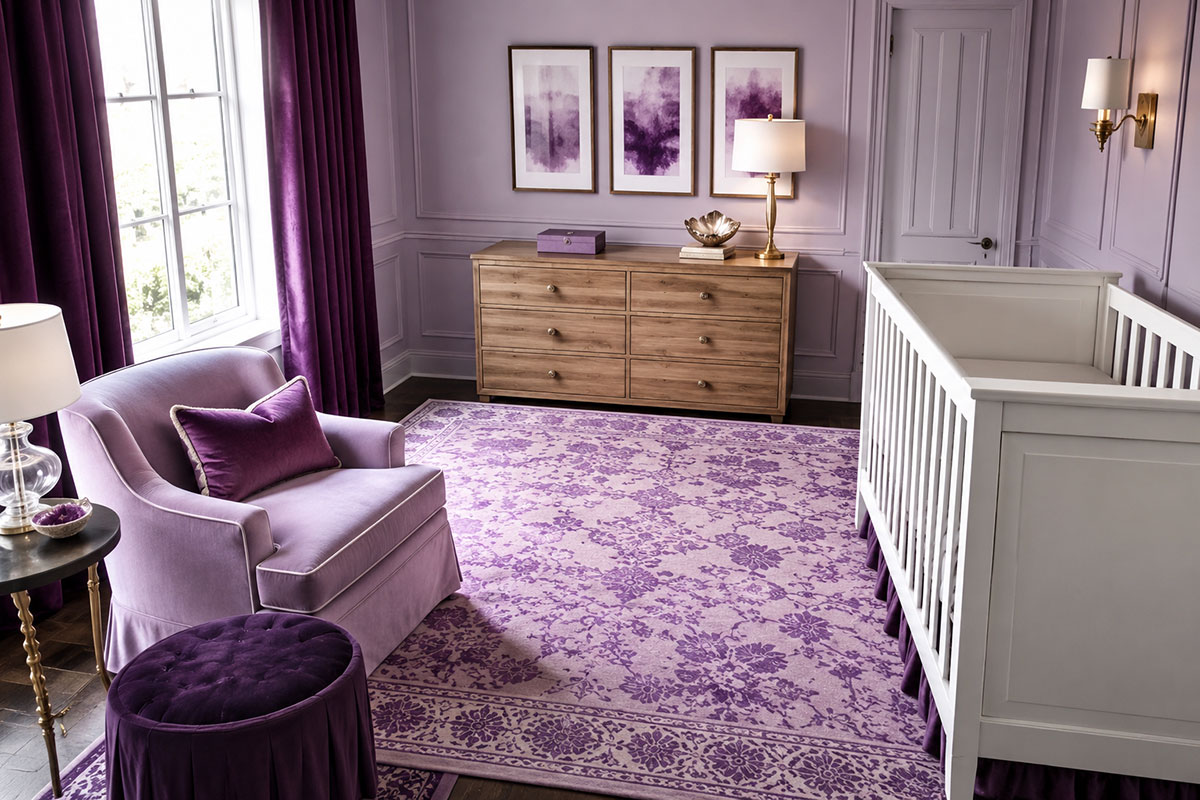
I'd spend more effort getting the large pieces to cooperate than collecting tiny accessories. Walls, floor, curtains and furniture account for most of what you see when you walk into the room. Get those right and you don't need much more.
Purple Nursery Theme Ideas from Butterflies to Hot Air Balloons
Purple can support a theme, but it doesn't require one. If you already like the color enough to build the room around lavender, lilac or plum, a few recognizable details may be all you need.
Butterfly nursery: Lavender and butterflies fit naturally together, especially when the butterflies are concentrated in one wall feature, artwork or a mobile rather than repeated on every surface. See the complete butterfly nursery theme if you want to take that idea further.
Floral nursery: Start with a floral pattern that actually contains the purple you want. Then pull one or two colors from the flowers for the rest of the room. Don't buy the paint first and spend the next month trying to find florals that almost match it.
Hot air balloon nursery: Dusty purple can sit beside gray, cream, copper, muted blue or warmer earth colors without making the room look like a traditional purple nursery. There is a purple elephants and hot air balloons nursery that I have featured on this site that gives that palette a more imaginative direction.
Modern purple nursery: Skip a literal theme. Use a muted purple wall or rug, simple furniture, black or charcoal accents and one graphic piece of art. The color itself becomes the design direction.
Vintage purple nursery: Dusty lilac, mauve or plum can work with darker wood, antique-style frames, floral fabric and traditional furniture shapes. I'd keep the purple a little muted here rather than using a clear bright violet.
Purple and black nursery: This combination goes much bolder and can support music, gothic, rock-and-roll or other less traditional decorating ideas. You can see a real example on the purple and black punk rock nursery page.
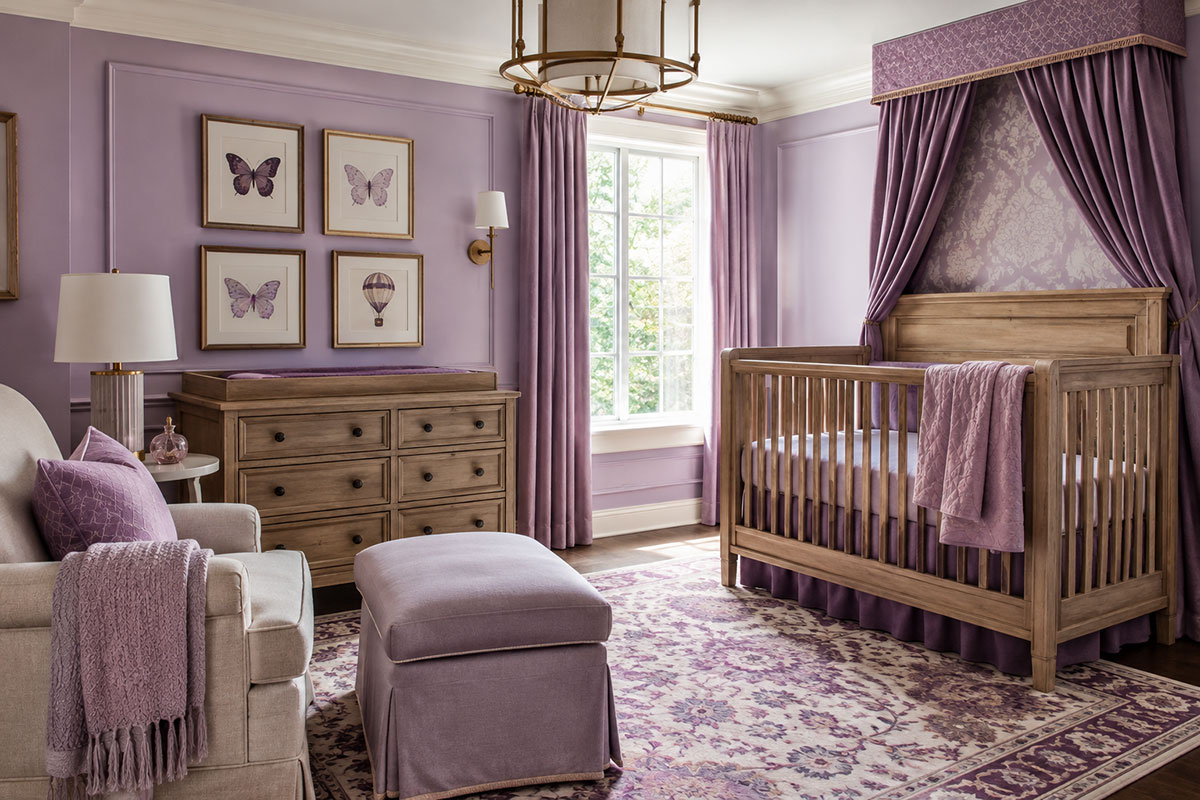
If you're undecided between several themes, choose the purple palette first and leave the theme alone for a few days. Once the walls, crib finish, rug and curtains make sense together, you'll have a much easier time seeing whether the room wants butterflies, florals, balloons, vintage details or no theme at all.
You don't need all of it. A purple nursery can be complete with nothing more complicated than a beautiful wall color, furniture that belongs with it, a well-sized rug and a few carefully chosen details.
When you click on links to various merchants on this site and make a purchase, this may result in this site earning a commission. This does not affect the price you pay.

UBGI Gold Standard 2026
Reviewed under the site's
editorial checklist.
Photos, decorating ideas, party setups and reader submissions are shared for inspiration unless a page is specifically presented as a pattern, tutorial, reference guide or step-by-step project. Follow the instructions, measurements, safety guidance and manufacturer directions provided for the particular project or product.
About Jan | Contact | Baby Nursery Ideas (Blog) | Site Map | Privacy Policy | Disclosure Policy | Disclaimer | Affiliate Disclosure | Earnings Disclosure | Facebook | Pinterest
I am a participant in the Amazon Services LLC Associates Program, an affiliate advertising program designed to provide a means for us to earn fees by linking to Amazon. As an Amazon Associate I earn from qualifying purchases.
Copyright © 2006-2026. All Rights Reserved.