Nursery Rugs: Best Sizes, Materials and Placement Ideas
Nursery rugs can make a baby's room warmer, quieter, and more comfortable, but choosing the right rug is not always as simple as picking a cute color or pattern. The best nursery rugs are the right size for the room, easy to clean, safe for babies, and durable enough to handle daily life with little ones. This guide covers nursery rug sizes, placement ideas, materials, safety considerations, and decorating tips to help you choose a rug that works beautifully in your nursery.
Plan the Rest of the Nursery
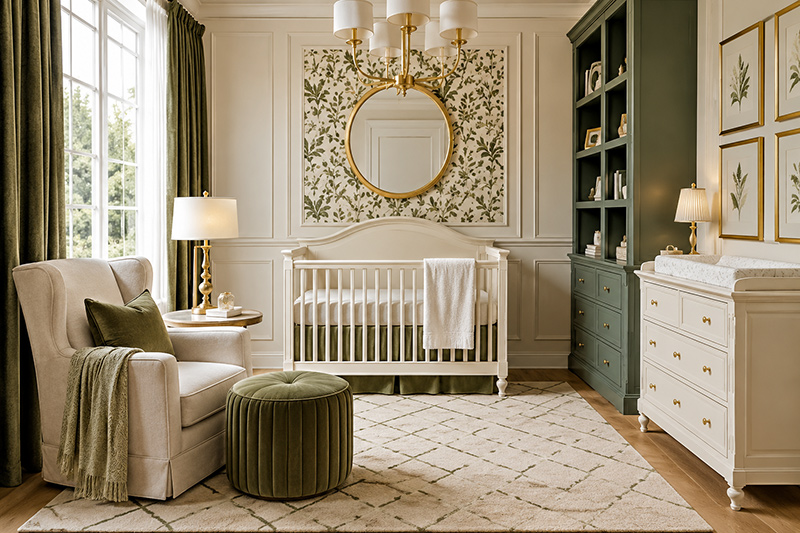
Choosing the right nursery rug size helps anchor the room while adding warmth, comfort, and style.
Shop Nursery Rugs
Browse washable nursery rugs, soft area rugs, nursery rug pads, cotton rugs, wool rugs, and easy-clean options in sizes that work under cribs, beside gliders, and in the center of the room.
Find Your Nursery Rug Answer Fast
The nursery can be completely finished and still look like something never quite came together.
I've seen rooms with carefully chosen paint, a crib everyone loved, organized storage, and coordinated bedding that somehow still looked unfinished. The missing piece was often the rug. Not because the room needed another decoration, but because the floor never connected the furniture into a complete space. The right nursery rug quietly solves that problem.
Quick Answer: The best nursery rugs are large enough to anchor the crib area, easy to maintain, low enough to walk on safely, and positioned so the crib, chair, and dresser look connected instead of scattered around the room.
A nursery rug can make an average room look intentional without changing a single piece of furniture.
That is why rug size matters far more than pattern, color, or trend.
Furniture placement often determines which rug size will actually work. Window placement also affects how rugs define a room, especially when natural light becomes part of the design. Before finalizing your layout, review these nursery window treatment ideas to coordinate rugs, furniture, and windows as one complete nursery design.
Nursery Rug Size Guide That Prevents Expensive Mistakes
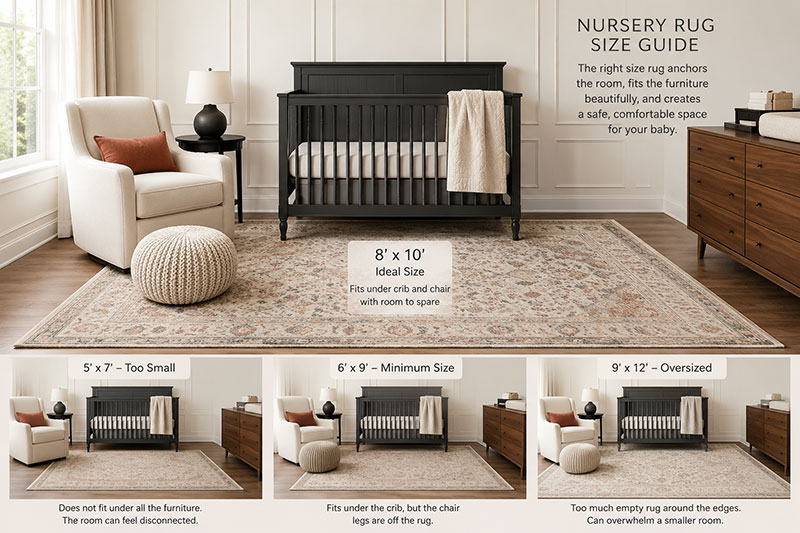
Rug size affects the entire room long before anyone notices the pattern.
The most common nursery rug mistake is buying one that is too small.
Many people assume a rug only needs to fill an empty spot on the floor. In reality, a rug should help organize the furniture arrangement.
A nursery rug that looked generous in the showroom can suddenly seem tiny once a crib, dresser, chair, hamper, and storage baskets are placed around it.
That happens because your eye starts comparing the rug to the furniture instead of the room.
It is one of the least discussed decorating mistakes and one of the most common reasons nursery rugs get replaced.
For many baby rooms:
- 5x7 rugs work well beside a glider or in compact spaces.
- 6x9 rugs fit many standard nursery layouts.
- 8x10 rugs often provide the most complete furniture arrangement.
- Round nursery rugs can define reading corners or open floor areas.
A simple trick I use is outlining the rug size with painter's tape before ordering. Five minutes with a tape measure can prevent weeks of frustration waiting for returns and exchanges.
Parents often discover this problem after everything else has already been installed.
By then, the rug is trying to adapt to the room instead of helping shape it.
I believe the rug should be selected at roughly the same time as the crib because both pieces influence the room's footprint.
Why Nursery Rugs Look Smaller After Furniture Arrives
This issue deserves its own section because it surprises people every year.
An empty room gives a false sense of scale.
A 6x9 rug spread across bare flooring can look huge. Once the crib, chair, dresser, blackout curtains, hamper, changing station, and wall decor are added, the visual balance changes completely.
Suddenly the rug is competing against the room instead of supporting it.
That is why many professional room photographs use larger rugs than people expect.
The rug is not there to decorate the floor. It is there to organize everything sitting on top of it.
Understanding that single concept prevents more nursery rug mistakes than any decorating trend ever could.
Should a Rug Go Under a Crib?
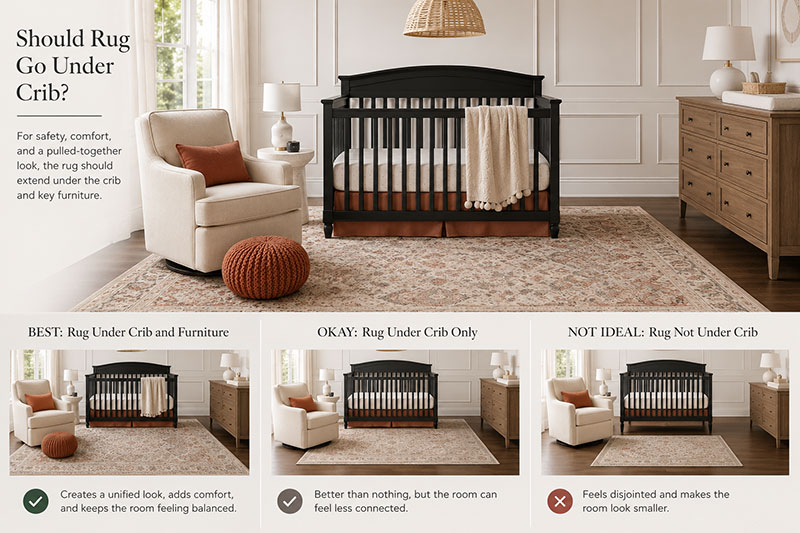
Connecting furniture to the rug creates a more unified nursery layout.
Yes. In many nurseries, placing part of the crib on the rug creates a more finished layout.
The goal is not to cover as much flooring as possible. The goal is to visually connect furniture pieces.
Three arrangements consistently work well:
- The entire crib sits on the rug.
- The front crib legs rest on the rug.
- The rug connects both the crib and nursery chair.
The second arrangement is often the easiest to achieve and frequently creates the most balanced appearance.
I once helped evaluate photos from several reader nurseries where the owners felt something looked off. In nearly every case, the issue was not the crib, wall color, or accessories. The rug simply stopped too far away from the furniture.
After adjusting the layout, the room looked more cohesive without purchasing anything new.
That experience permanently changed how I evaluate nursery floor plans.
For rooms where every inch matters, these Small Nursery Layout Ideas can help determine whether the rug should anchor furniture or define open floor space.
Furniture should look connected. Not randomly placed.
Best Nursery Rug Materials for Daily Life
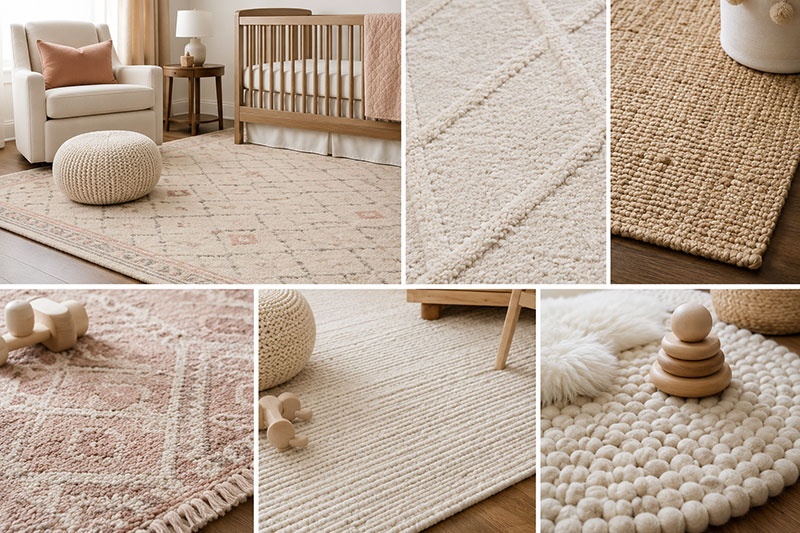
Material choice often determines whether you still like the rug six months later.
Nursery rug material becomes important the first time a bottle leaks, a diaper mishap occurs, or a snack ends up where it should not be.
Every nursery eventually experiences at least one of those moments.
Cotton nursery rugs are popular because they are relatively easy to manage and work well with many decorating styles.
Wool rugs can provide excellent longevity when maintained correctly.
Synthetic fibers remain common because many households want simpler stain management and lower upkeep.
The right material depends less on decorating trends and more on how the room will actually be used.
One detail people rarely think about is chair movement. The issue often appears around 2 a.m. when you're half asleep and the chair suddenly doesn't glide the way it did on bare flooring.
A nursery glider that moves perfectly on hardwood flooring can become frustrating once a very deep rug is placed underneath it. If you expect to spend long evenings feeding, reading, or rocking, test how the chair moves across the rug before committing to extra thickness.
That small detail can affect the room every single day.
The word soft gets used constantly in nursery decorating discussions, but comfort alone should not drive the decision. Extremely plush rugs can be harder to vacuum, slower to dry, and more difficult to move furniture across.
Many product descriptions focus on appearance. Daily life tends to focus on cleaning.
I believe maintenance deserves equal consideration.
If indoor air quality is part of your decision process, the EPA Indoor Air Quality Program provides useful information about materials commonly used inside homes.
Color and pattern matter. Practical use matters long after the decorating excitement fades.
Why Washable Nursery Rugs Keep Getting Popular
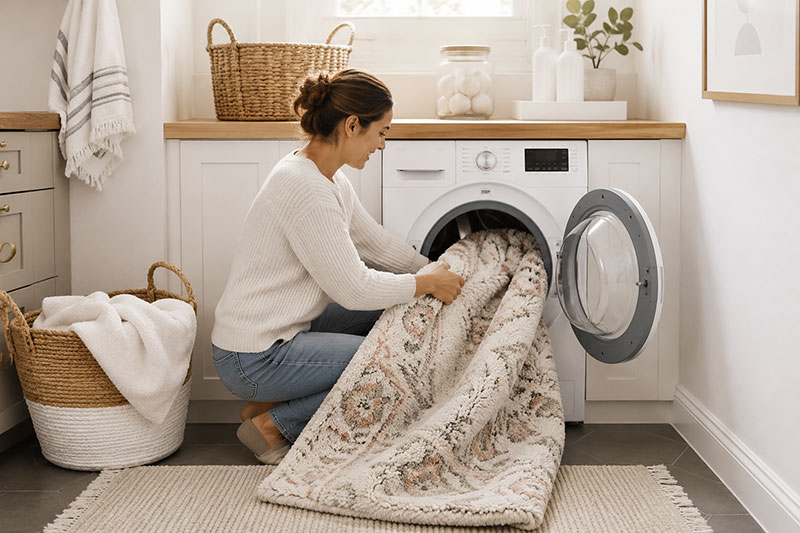
Easy cleaning becomes far more important once the nursery is used every day.
Machine washable nursery rugs have become popular for a very simple reason.
Life happens on the floor.
Bottles leak. Diaper bags tip over. Toddlers eventually bring snacks into rooms where snacks were never supposed to go.
The appeal of a washable nursery rug becomes obvious the first time something ends up on the rug at an inconvenient hour.
Machine washable nursery rugs are especially useful in homes where the nursery doubles as a feeding, reading, and play space throughout the day.
Before buying one, verify that the rug actually fits your washing machine. Some products advertise washable construction but require commercial-size machines once you reach larger dimensions.
Look for flat edges, straightforward care instructions, and a design that can handle repeated cleaning without losing shape.
Parents often focus on the first day a rug arrives. The better question is how it will look after the fiftieth cleaning.
Non Toxic Nursery Rugs and Indoor Air Considerations
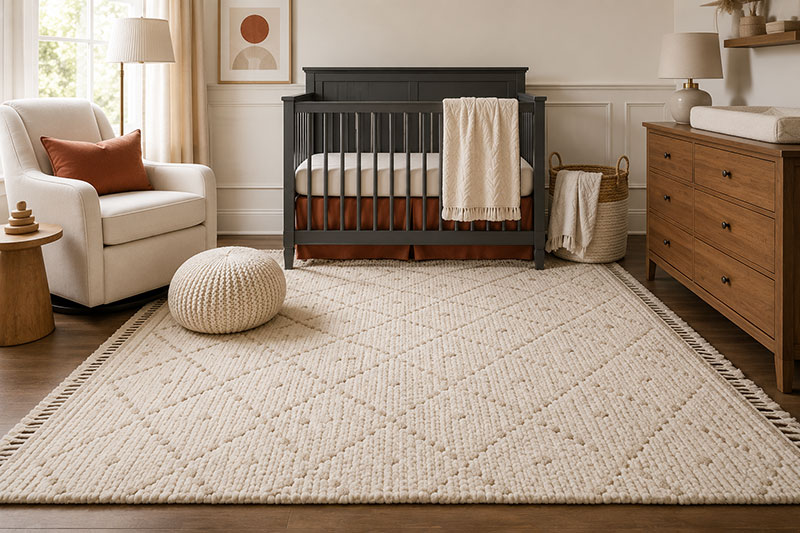
Material transparency matters more than marketing buzzwords.
Many families search for non toxic rugs for nursery spaces because babies spend so much time close to the floor.
That concern is understandable.
What makes this category confusing is the amount of marketing language involved.
Rather than focusing on slogans, look for manufacturers that clearly explain materials, backing systems, dyes, and testing standards.
Organic cotton rugs, natural fiber rugs, and products with documented certifications are often where people begin their search.
I believe clear information from the manufacturer is more valuable than vague claims printed on packaging.
If indoor air quality is an important factor in your decision, compare documentation carefully and allow new products time to air out according to manufacturer guidance.
Nursery Rug Safety Starts with the Rug Pad
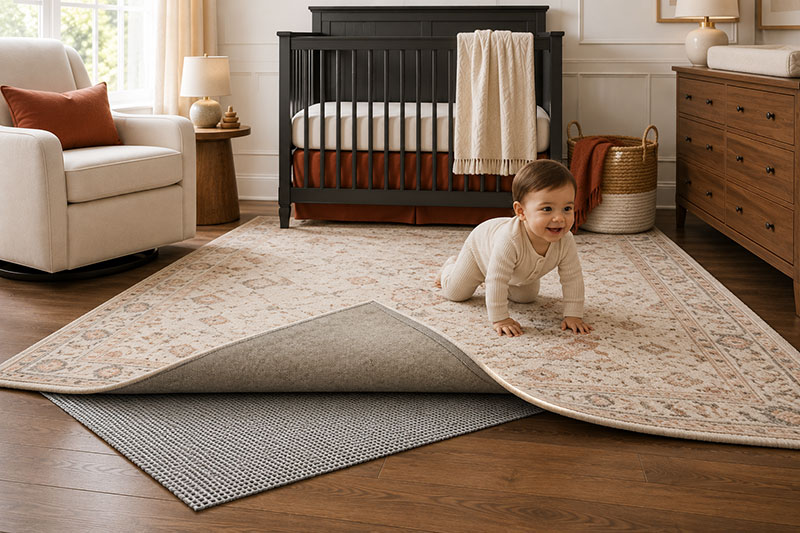
A quality rug pad can have a bigger impact on daily use than many people realize.
People spend hours comparing rug patterns and almost no time thinking about the rug pad.
That is backwards.
Choosing the correct rug pad is one of the least discussed nursery decisions, yet it affects the room every day. A quality rug pad helps prevent sliding, reduces bunching, cushions footsteps, protects flooring, reduces wear, and helps keep corners flat over time.
Many nursery safety issues begin with movement.
If the rug shifts every time someone walks across it, eventually a corner lifts, an edge curls, or the entire rug drifts out of place.
Match the rug pad to the flooring surface. Hardwood, laminate, luxury vinyl plank, and tile floors often require different pad materials. Always verify that the pad is compatible with your flooring manufacturer's recommendations.
When the floor itself is still undecided, compare the cleaning, comfort, noise and maintenance differences in my guide to the best flooring for a nursery before choosing the rug and pad.
Parents frequently focus on the rug itself and treat the pad as an afterthought. In reality, many complaints about nursery rugs sliding, bunching, wrinkling, or drifting across the floor are actually rug pad problems rather than rug problems.
I would rather buy a slightly less expensive rug with a quality pad underneath it than spend extra money on a premium rug sitting directly on the floor.
Check corners regularly, especially near the crib and doorway.
A nursery rug should lie flat.
High pile rugs can also collect more debris and become harder to maintain. Lower profile options are often easier to keep clean while providing a stable walking surface.
Safety improvements do not have to be complicated.
Most of the time they involve preventing small problems before they become bigger ones.
Nursery Rug Colors That Continue Working as the Room Changes
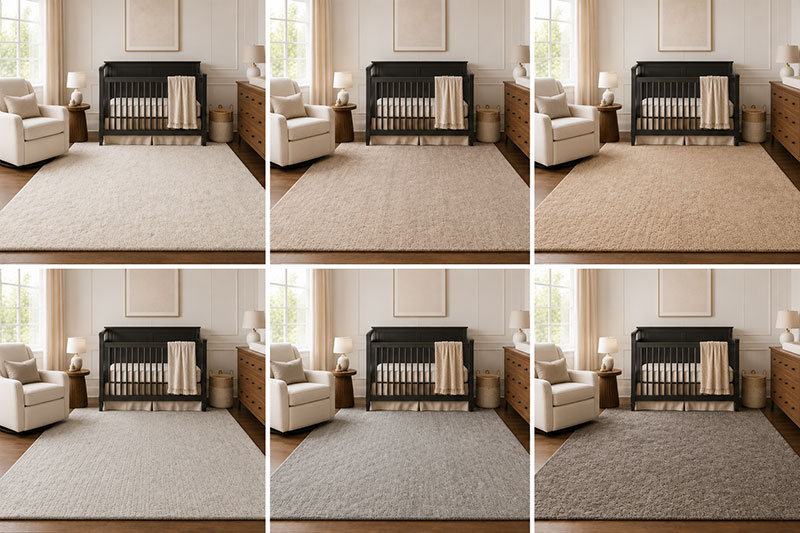
The right color supports the room instead of competing with it.
Color trends change much faster than rugs.
That is why I encourage people to think about the room two or three years from now instead of only the day the nursery is finished.
Pink nursery rugs remain popular in girl nurseries. Green nursery rugs continue appearing in nature-inspired rooms. Neutral nursery rugs remain common because they adapt easily as decor changes.
Pink requires a little more planning because the rug can either balance the nursery or turn the floor into one more competing pink surface. This guide to choosing a pink nursery rug compares blush, dusty rose, bright pink and patterned options according to the colors already in the room.
Sage green nursery designs have become popular because the color pairs naturally with wood furniture and works across several decorating styles.
One mistake I see fairly often is choosing a rug that matches the nursery today but not the room six months from now. The mobile changes, wall decor changes, and storage changes. The rug stays. That is why I tend to treat the rug as part of the room's foundation rather than an accessory.
Many nursery purchases come and go during the first few years. The rug tends to stay longer than people expect, which is why I prefer choosing a color that works with several decorating directions rather than only one.
If you are building your room around a specific palette, review these Baby Color Schemes before making a final decision.
A rug should support the color story already happening in the room.
When every major element demands attention, the room starts looking busy even when there are very few pieces inside it.
Nursery Rug Ideas That Support Popular Themes
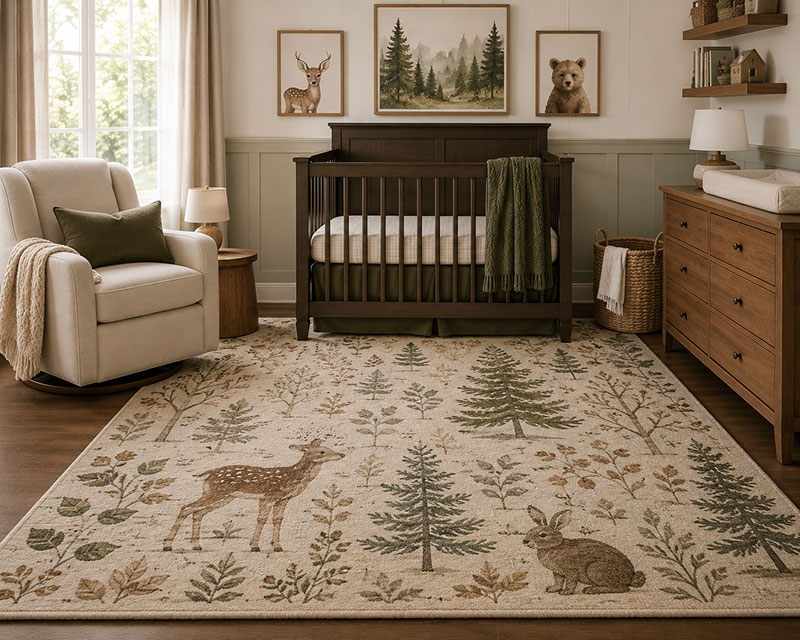
A themed rug works best when it complements the room instead of dominating it.
A nursery rug can reinforce a theme without becoming the center of attention.
That balance is often what separates a room that looks polished from one that feels overloaded.
Woodland nursery rugs remain a favorite because they pair naturally with animal artwork, wood tones, and nature-inspired accents.
Safari nursery rugs work well when the rest of the room uses a restrained palette.
Ocean nursery rugs can support coastal themes without requiring every accessory to match.
If you are planning a woodland room, these Fox Woodland Nursery Ideas provide examples of how floor coverings can support the overall design.
For broader inspiration, browse these Baby Nursery Themes and use Baby Color Schemes to keep the rug, walls, furniture, and accents working together.
If your walls are still undecided, these Nursery Wallpaper Ideas can help coordinate patterns and textures throughout the room.
The most successful themed nurseries often show restraint. A rug can quietly reinforce the theme without carrying the entire design by itself.
For a handmade option, this giant flower crochet baby play mat pattern creates a colorful floor piece for supervised play that can stay in the room later as a crochet nursery rug.
Nursery Rug Buying Checklist
- Measure the room before shopping.
- Determine whether the rug will sit under the crib, chair, or both.
- Choose a size that connects furniture.
- Verify cleaning instructions.
- Consider a rug pad for stability.
- Check material information carefully.
- Match the rug to your existing color palette.
- Avoid curled edges and unstable placement.
- Think about how the room will function in two years, not just today.
That last point matters more than many decorating guides admit.
The nursery changes quickly. The best rug choices continue making sense as those changes happen.
Frequently Asked Questions About Nursery Rugs
What size rug is best for a nursery?
For many nurseries, a 6x9 or 8x10 rug provides enough coverage to connect the crib, chair, and dresser without overwhelming the room. The best size depends on furniture placement, not just room dimensions.
Can a nursery rug be too big?
A nursery rug can be oversized if it crowds door swings, closet access, or furniture movement. In most cases, rugs that are too small create more decorating problems than rugs that are slightly larger than necessary.
Should a nursery rug go under the crib?
Yes. Many layouts place either the entire crib or the front crib legs on the rug to create a more connected furniture arrangement.
Are washable nursery rugs worth buying?
For many families, yes. Easier cleaning becomes valuable once the nursery is used daily.
What material is best for nursery rugs?
Cotton, wool, and quality synthetic fibers all have advantages. The best choice depends on maintenance expectations and household needs.
What should I look for in a non toxic nursery rug?
Look for clear material disclosures, transparent manufacturing information, and recognized testing or certification standards. Detailed documentation is often more useful than broad marketing claims.
Do nursery rugs need rug pads?
In many situations, yes. Rug pads help reduce movement, improve comfort, and protect flooring.
What color nursery rug should I choose?
Select a color that supports the room's existing palette rather than introducing another dominant color that competes for attention.
Final Thoughts on Choosing Nursery Rugs
The best nursery rugs are not necessarily the most expensive, the trendiest, or the ones getting the most attention online.
They are the rugs that fit the room correctly, clean up without creating headaches, stay in place, and help the crib, chair, dresser, and decor feel connected.
After years of looking at nursery layouts, I still believe rug size causes more decorating disappointment than paint color, bedding, curtains, or wall art. Fortunately, it is also one of the easiest problems to avoid.
Start with size. Think about placement. Consider how the room will actually be used.
Get those decisions right, and the rug often becomes the piece that quietly pulls everything together.
When you click on links to various merchants on this site and make a purchase, this may result in this site earning a commission. This does not affect the price you pay.

UBGI Gold Standard 2026
Reviewed under the site's
editorial checklist.
Photos, decorating ideas, party setups and reader submissions are shared for inspiration unless a page is specifically presented as a pattern, tutorial, reference guide or step-by-step project. Follow the instructions, measurements, safety guidance and manufacturer directions provided for the particular project or product.
About Jan | Contact | Baby Nursery Ideas (Blog) | Site Map | Privacy Policy | Disclosure Policy | Disclaimer | Affiliate Disclosure | Earnings Disclosure | Facebook | Pinterest
I am a participant in the Amazon Services LLC Associates Program, an affiliate advertising program designed to provide a means for us to earn fees by linking to Amazon. As an Amazon Associate I earn from qualifying purchases.
Copyright © 2006-2026. All Rights Reserved.